EN ISO 20471 fabric requirements: what buyers should check before garment production.
Start with the fabric you plan to buy. Match its sample code, colour and finish to the available report, then check what your garment project still needs. A yellow swatch or a catalogue specification alone does not establish EN ISO 20471 garment conformity.
Updated High-visibility fabricDocument reviewEN ISO 20471 context
FROM A REQUIREMENT TO A FABRIC REQUEST
Which sample are you asking us to review?
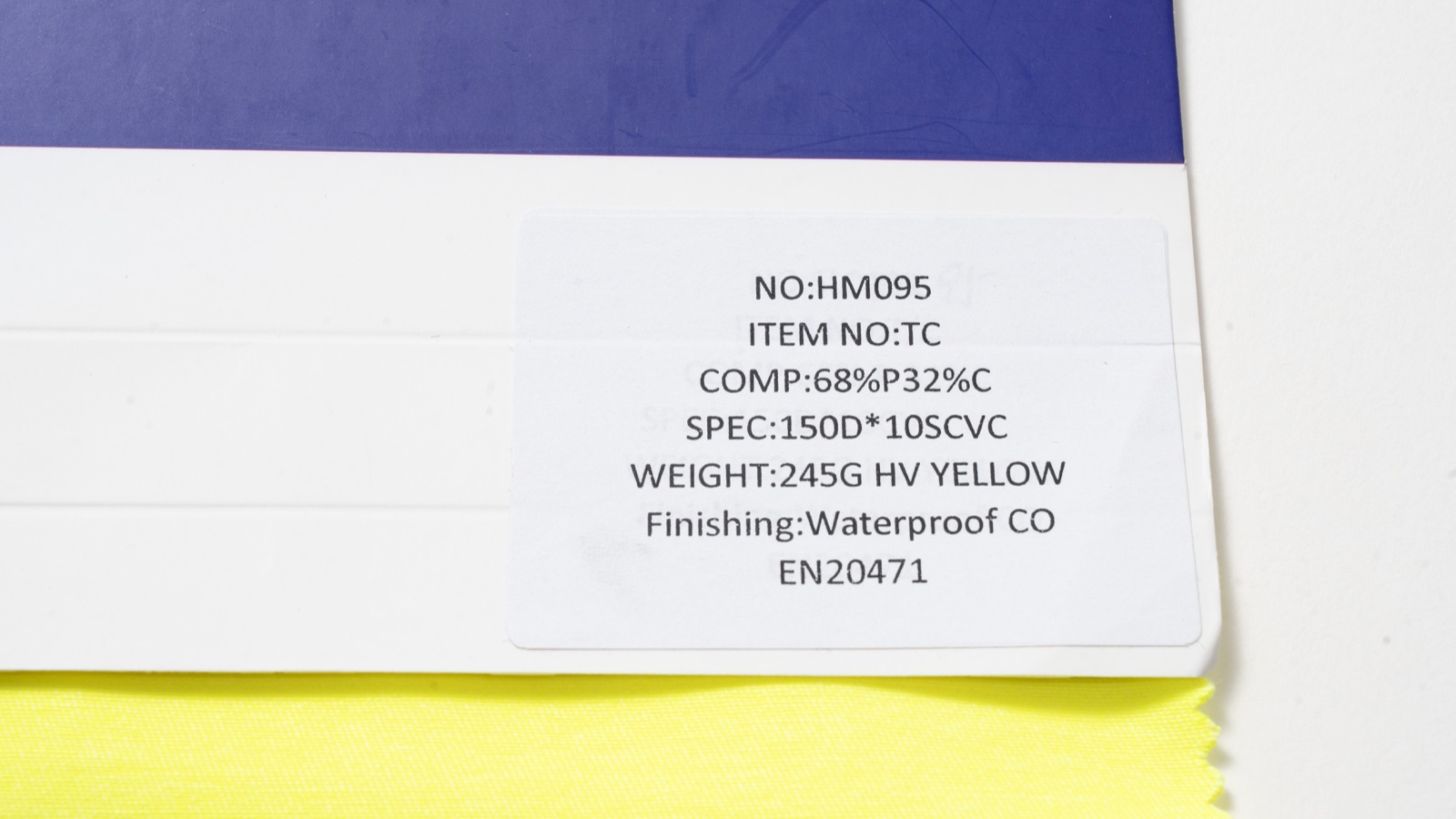
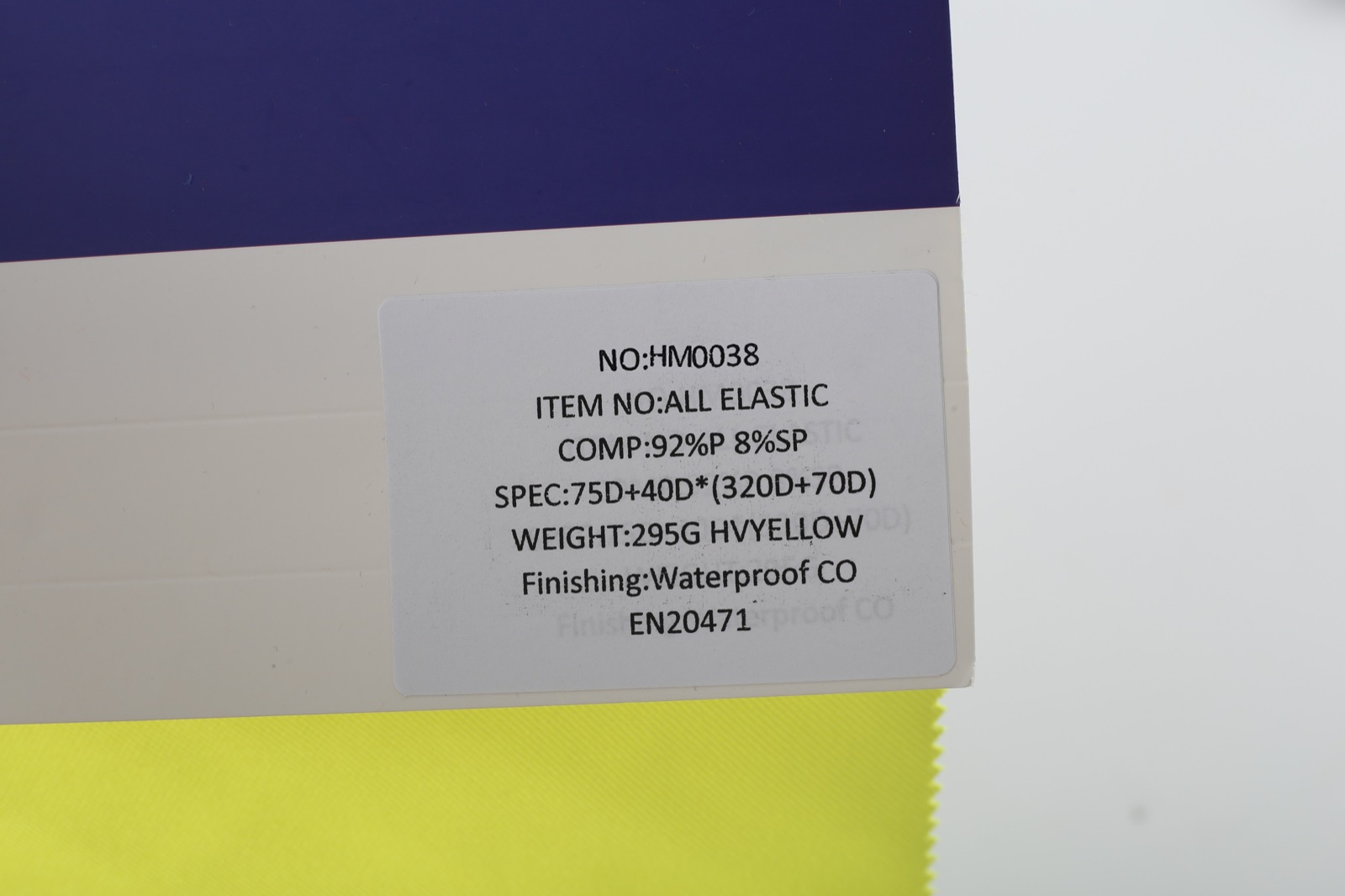
HM095 and HM038 are two yellow fabric references in our catalogue. Use their codes to request the actual swatch and its offered specification. They differ in blend and weight; keep any proposed substitution separate in the quotation.
Tell us the garment, destination market, quantity per colour and intended washing process. Ask which document matches the offered sample, colour and finish, and what still needs testing. Keep those details with the quotation so your buying and production teams use the same reference.
These are catalogue samples, not a claim that either is certified for your finished garment. Current usable width, order tolerance, price, MOQ, lead time and matching test scope must be confirmed for the actual request.
Fluorescent yellow, orange-red or red direction, plus product code and sample condition.
Daylight visibility depends heavily on the background material used in the garment.
Fabric construction
TC woven, stretch, knitted, coated or laminated route; yarn/specification and GSM.
Structure affects durability, comfort, movement, hand feel and production suitability.
Finishing
Water-repellent, coating, antistatic, FR or other finishing terms and their test context.
Finishing words are often misunderstood as full garment performance claims.
Reflective compatibility
Where retroreflective tape or combined-performance material will be placed in the finished garment.
Low-light visibility depends on garment design, not only on fluorescent fabric.
Document scope
Check whether a report is fabric-side, color-side, finishing-side or garment-level.
The wrong document scope can create compliance risk during buyer review.
Common buyer mistakes
Treating yellow fabric as garment certification
A fluorescent fabric can be a candidate material, but garment certification depends on design, material area, reflective placement and final testing.
Ignoring after-wash behavior
Workwear programs should discuss color, shrinkage, hand feel and finishing durability after washing or repeated use.
Mixing fabric and rainwear claims
Water-repellent finishing is not the same as a complete waterproof garment system with seam and breathability review.
FAQ
Can a fabric itself be EN ISO 20471 certified?
Use careful wording. Fabric test evidence can support garment development, but EN ISO 20471 is normally assessed in the context of high-visibility clothing. Final claims should be verified at garment level.
What should I ask a supplier before sampling?
Ask for product code, composition, GSM, color direction, finishing, available report references, intended garment use and any washing or durability assumptions.
Is retroreflective tape part of the fabric order?
It depends on the sourcing scope. If the buyer is only purchasing fabric, reflective tape and garment layout still need to be discussed separately with the garment maker or final-certification party.
Related pages
Use these pages to connect the technical checklist with product-code review and sample discussion.
Use the product codes below as current catalog starting points, then confirm the physical swatch, lot, construction, GSM, color, finish and report scope. A product code or fabric-side record does not establish finished-garment conformity.