TC workwear fabric vs four-way stretch fabric: how to choose before sampling.
Choose workwear fabric by the weight and movement your garment needs. Compare the exact TC or stretch sample, then match the specification and washing brief before requesting a quote.
For a workwear brief below 200 g/m², ask us to check HM054 and HM056 against your finished-weight requirement. Both catalogue labels read 125G. HM038 is listed at 295G, so keep the different weight briefs separate.
HM054 and HM056 have the same listed blend and weight, but different yarn specifications. Compare their physical swatches before treating one as a replacement for the other.
What if the garment will be industrially washed?
Tell us the washing programme, temperature, cycle count, drying method and what must remain after washing. We still need SKU-specific stretch/recovery and industrial-wash records; neither a 125G label nor hand stretching answers those questions. Agree finished GSM and tolerance for the order.
Compare two catalog references, then test the swatches
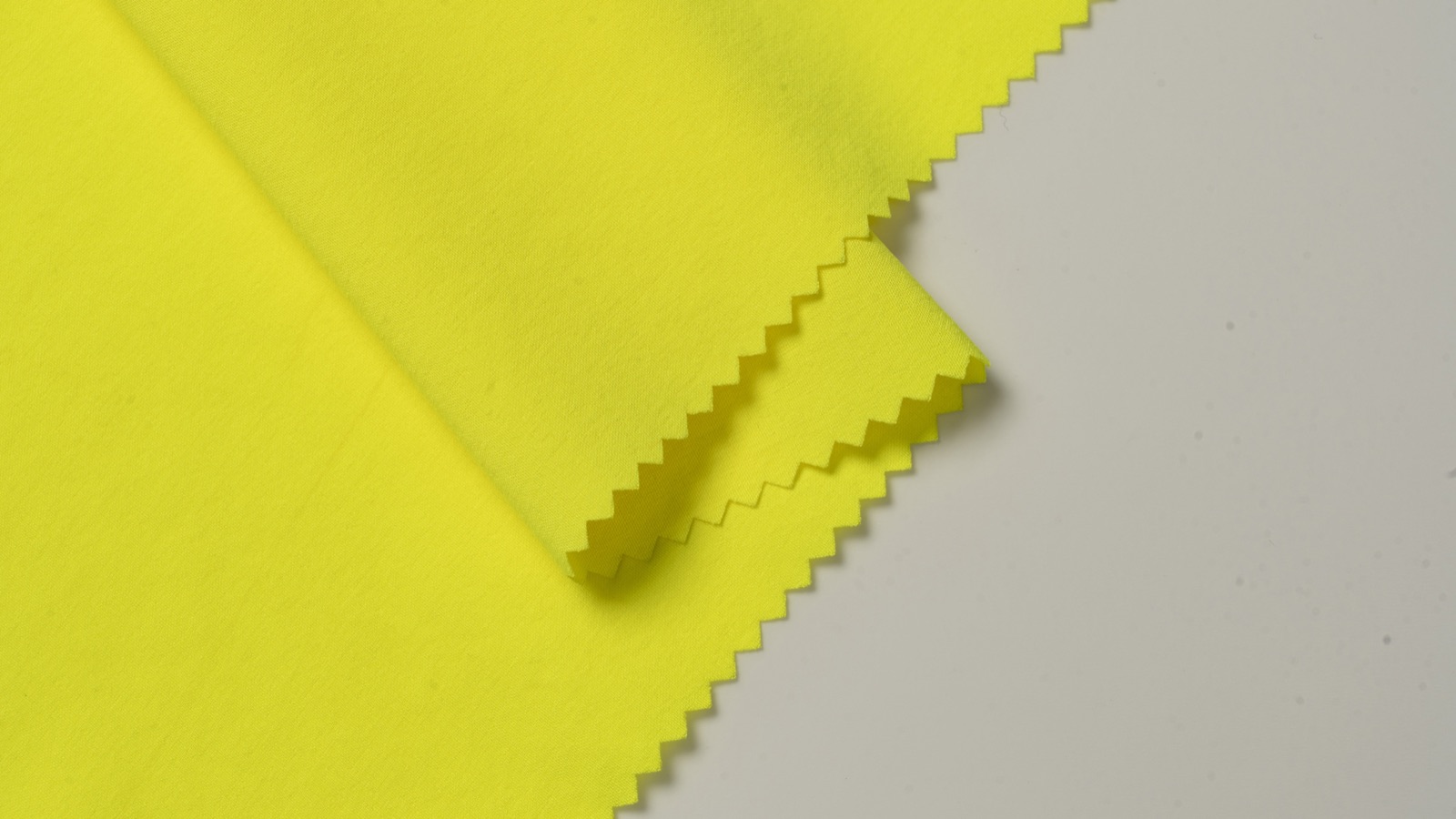
These are catalog specifications, not results from a controlled wear trial. HM095 is a polyester-cotton reference: 68% polyester / 32% cotton, 245 g/m², high-visibility yellow. HM038 is a high-visibility yellow four-way-stretch reference at 295 g/m². Confirm the current sample composition and finishing before ordering.
The listed weight difference is 50 g/m² and the constructions differ. Compare actual swatches for hand feel, movement and after-wash behaviour; no measured comparison is provided here.
Request swatches of both codes with the sample lot, composition, weight, width, colour and finishing recorded.
Use the same garment pattern and intended work movements to compare fit and movement. Record the direction of extension and recovery instead of relying on hand stretching alone.
Agree the test method, washing programme and acceptance limits before testing. Compare dimensional change, recovery and seam behaviour before and after the agreed washes; do not transfer another product's report to either sample.
For a high-visibility garment, separately review fabric colour and performance evidence, reflective material placement and the finished-garment conformity requirements.
Evidence basis: the linked product specifications and the current fabric catalog. This is a sample-review procedure, not a claim that these comparative tests have been completed.
State whether you are making jackets, trousers, vests or coveralls. Give the target weight and the parts of the garment that need reinforcement.
Map the work movement
List the work movements that matter, such as reaching, kneeling or climbing. Compare the chosen swatches in the intended garment pattern.
Separate comfort from compliance
A comfortable fabric is not automatically compliant. Visibility, finishing, test evidence and finished-garment construction still need their own review.
Compare quotations for the same finished GSM, usable width, colour, finish, quantity and trade terms. Blend names alone do not tell you which quotation costs less.
Does four-way stretch always mean better workwear?
Choose stretch when the garment needs it, then check the actual directions of extension, recovery, weight and washing requirements on the selected sample.
Should I ask for both HM038 and HM095?
Ask for HM095 and HM038 when comparing those two weight and construction routes. For a below-200 g/m² brief, start a separate HM054/HM056 sample comparison and confirm the finished GSM.